


Cloud Kitchen Business Plan 2026: Step-By-Step Guide for Entrepreneurs
- dorothypang12
- Apr 7
- 5 min read

What is a Cloud Kitchen?
A cloud kitchen service—also known as a ghost kitchen or virtual kitchen—is a modern food production model focused solely on preparing meals for delivery, without offering a traditional dine-in experience. These kitchens operate primarily through online food delivery platforms and mobile applications, enabling direct interaction with customers. The model emphasizes efficiency, scalability, and digital integration, making it a popular choice in the evolving food service landscape.
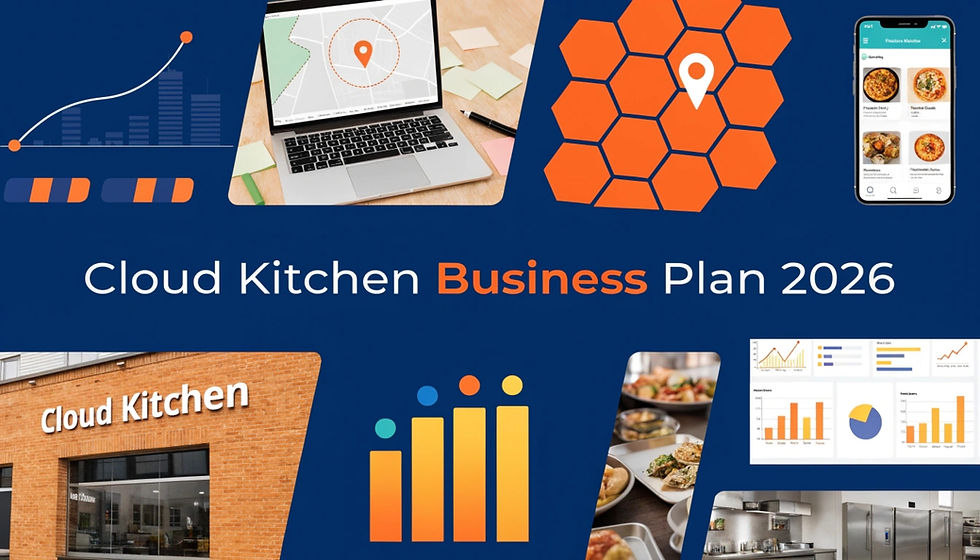
A cloud kitchen business setup allows entrepreneurs and restaurant brands to significantly reduce operational costs by eliminating expenses related to prime retail locations, large dining spaces, and extensive front-end staff. Multiple food brands can operate from a single kitchen facility, enabling businesses to diversify menus, experiment with new cuisines, and enter new markets with relatively low investment and risk.
By leveraging data analytics and digital tools, cloud kitchens can optimize menu offerings, predict customer demand, and streamline order processing and delivery logistics. This results in faster service, improved customer satisfaction, and better cost management. The flexible and scalable nature of a cloud kitchen business setup makes it highly attractive for startups, established restaurant chains, and digital-first food ventures aiming to expand efficiently in the competitive food delivery ecosystem.
IMARC Group's "Cloud Kitchen Business Plan and Project Report 2026: Industry Trends, Business Setup, Revenue Model, Investment Opportunities, Income, Expenses, and Profitability" provides a complete roadmap for setting up a cloud kitchen feasibility study. It covers a comprehensive market overview down to micro-level details such as business setup, equipment and technology requirements, manpower needs, business workflows, and regulatory considerations. The report provides in-depth insights into project economics, covering capital investments, funding options, operating costs, revenue projections, expected return on investment (ROI), net present value (NPV), profit and loss analysis, and overall financial viability.
How Do You Set Up a Cloud Kitchen Business?
The IMARC report serves as a complete guide for setting up a cloud kitchen business, covering:
• Industry overview and market performance
• Business workflows and service offerings
• Site selection and equipment requirements
• Cost structure (CapEx & OpEx)
• Revenue generation models
• Risk mitigation strategies
• Licensing, food safety, and regulatory compliance
• Profitability and investment analysis
Key Requirements for Setting Up a Cloud Kitchen Business
1. Business Model & Operations Plan
• Service Overview: Delivery-only kitchens, multi-brand virtual restaurants, meal kit fulfilment, catering cloud kitchens
• Service Workflow: Order receipt → kitchen preparation → packaging → dispatch to delivery partner → customer delivery
• Revenue Model: Per-order commissions, subscription meal plans, corporate catering contracts, white-label brand licensing
• SOPs & Service Standards: Guidelines for food handling, hygiene protocols, order accuracy, packaging standards, and delivery SLAs
2. Technical Feasibility
• Site Selection Criteria: Industrial zones, commercial complexes, or standalone units based on delivery radius, rental cost, and demand density
• Space & Costs: Commercial-grade kitchen layout, cold storage, prep stations, and order dispatch areas
• Equipment & Suppliers: Commercial ovens, fryers, refrigeration units, kitchen display systems (KDS), packaging machinery
• Interior Setup & Fixtures: Efficient workflow layouts optimized for multi-brand operations and high-volume throughput
• Utility Requirements & Costs: Power (high-load cooking), gas, water, internet connectivity for order management platforms
• Human Resources & Wages: Head chefs, line cooks, packaging staff, delivery coordinators, operations managers
3. Financial Feasibility
Includes:
• Capital Investments & Operating Costs
• Revenue & Expenditure Projections
• Profit & Loss Analysis
• Taxation & Depreciation
• ROI, NPV & Sensitivity Analysis
What Are the Latest Market Trends in Cloud Kitchens?
The market is expanding due to:
• Exponential rise in online food delivery platforms (Uber Eats, Swiggy, Zomato, DoorDash, Deliveroo)
• Technology-driven operational optimization via AI, KDS, and real-time analytics
• Surging consumer preference for convenient, at-home dining experiences
• Low-cost multi-brand operations enabling rapid menu experimentation
• Growth of subscription-based meal delivery services
• Expansion of cloud kitchen aggregator platforms and Kitchen-as-a-Service (KaaS) models
Entrepreneurs increasingly leverage cloud kitchens as a lean, scalable entry point into the competitive food service industry.
Speak to an Analyst: https://www.imarcgroup.com/request?type=report&id=37228&flag=C
Market Analysis & Insights
Industry Overview
The report covers:
• Market drivers & challenges
• Demand patterns across delivery platforms
• Consumer preferences by cuisine type and order frequency
• Segmentation by kitchen type, brand model, and region
Competitive Landscape
Profiles of leading cloud kitchen operators and food-tech platforms including:
• Kitchen models and brand strategies
• Pricing and commission structures
• Market positioning and geographic expansion
• Technology partnerships and customer engagement models
Capital & Operational Cost Breakdown
Capital Expenditure (CapEx):
Equipment & machinery (commercial ovens, refrigeration, KDS) account for the largest portion of total capital expenditure. Facility development—including civil works and build-out—forms another substantial component. This allocation ensures a solid foundation for safe, high-throughput operations.
Operational Expenditure (OpEx):
In the first year of operations, key cost drivers include raw material procurement, salaries & wages, utilities, platform commissions, packaging, and marketing. By Year 5, total operational costs are expected to increase due to factors such as inflation, expanded delivery capacity, and rising labour cost.
FAQs
1. Is a license required to operate a cloud kitchen?
Yes, operating a cloud kitchen requires compliance with local food business regulations. Typically, this includes obtaining a food business license or permit, food safety certification (such as FSSAI in India), a trade license, GST/VAT registration, and fire safety clearance. Additionally, onboarding on food delivery platforms may require further documentation and approvals.
2. Who is the ideal target audience for a cloud kitchen?The primary audience includes working professionals, students, young families, and urban millennials who rely on the convenience of online food delivery. Other key segments include corporate clients ordering bulk meals and health-conscious consumers looking for specialized options such as vegan, keto, or gourmet cuisine.
3. How do cloud kitchens generate revenue?Cloud kitchens earn revenue through multiple channels, including individual order sales via food delivery platforms like Swiggy, Zomato, and Uber Eats, direct orders through their own apps or websites, subscription-based meal plans, corporate catering services, and brand licensing or white-label partnerships.
4. Are cloud kitchens profitable?Yes, cloud kitchens are generally considered highly cost-efficient and scalable. With lower overhead costs—due to the absence of dine-in space and reduced staffing—combined with the ability to operate multiple brands from a single kitchen and optimize menus using data insights, businesses can achieve strong profit margins over time.
Why This Report Matters
Cloud kitchens represent one of the most disruptive and fast-growing segments in the global food service industry. Fueled by surging online food delivery demand, technology-driven operational efficiencies, and evolving consumer lifestyles, this model offers entrepreneurs, and established restaurant brands a highly scalable, low-overhead pathway to growth. This report equips stakeholders with the actionable insights needed to build a successful and profitable cloud kitchen operation — from site selection, equipment sourcing, and regulatory compliance to financial modelling, marketing strategy, and long-term profitability forecasting.
About Us
IMARC Group is a global management consulting firm that helps the world's most ambitious changemakers to create a lasting impact. The company excels in understanding its clients' business priorities and delivering tailored solutions that drive meaningful outcomes. We provide a comprehensive suite of market entry and expansion services. Our offerings include thorough market assessment, feasibility studies, company incorporation assistance, factory setup support, regulatory approvals and licensing navigation, branding, marketing and sales strategies, competitive landscape and benchmarking analyses, pricing and cost research, and procurement research.
Contact Us
IMARC Group
134 N 4th St. Brooklyn, NY 11249, USA
Email: sales@imarcgroup.com
Tel No: (D) +91 120 433 0800
United States: (+1-201-971-6302)


Comments